Sample data
Elastic Cloud Serverless projects are autoscaled environments, fully managed by Elastic and available on Elastic Cloud. Availability This functionality is generally available and ready for production usage. Serverless interfaces and procedures might differ from classic Elastic Stack deployments. The Elastic Stack includes Elastic's core products such as Elasticsearch, Kibana, Logstash, and Beats. Availability This functionality is generally available and ready for production usage. Unless stated otherwise on the page, this functionality is available when your Elastic Stack is deployed on Elastic Cloud Hosted, Elastic Cloud Enterprise, Elastic Cloud on Kubernetes, and self-managed environments. This documentation corresponds to the latest patch available for each minor version. If you're not using the latest patch, check the release notes for changes.
Serverless
Generally available
Stack
Generally available
Using sample data is a great way to start exploring the system and learn your way around. There are a few ways to easily ingest sample data into Elasticsearch.
The simplest way is to add one or more of our sample data sets. These data sets come with sample visualizations, dashboards, and more to help you explore the interface before you add your own data.
If you have no data, you will be prompted to install these packages when running Kibana for the first time.
To install sample data sets, you need all Kibana privileges for Integrations. Manage your roles, privileges, and spaces in Stack Management.
- Open the Integrations page using the global search field, then search for Sample Data using the integrations search field.
- Click Sample Data to open the Add data page.
- Select the sample data set you want to install and click Install data.
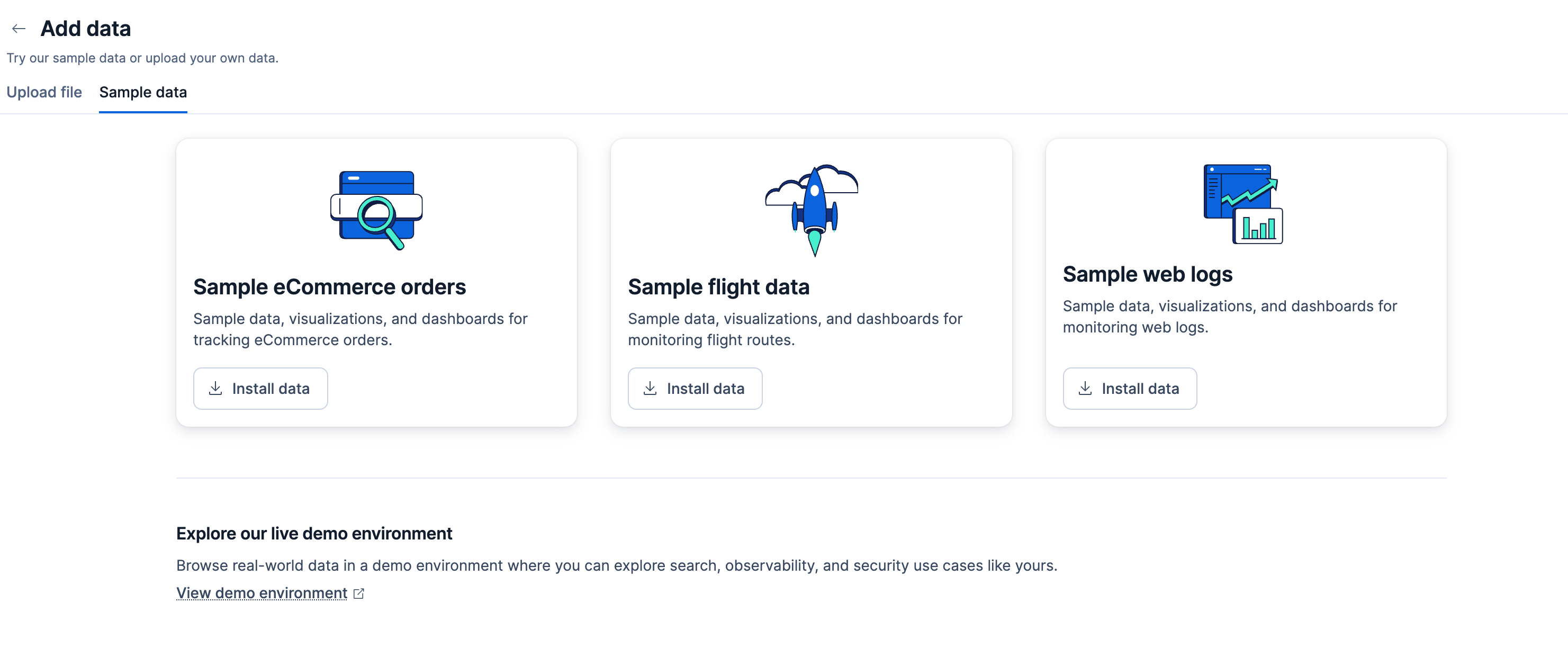
In versions 9.0 to 9.3, you must first expand the Other sample data sets section to see the available sample data sets.
Alternatively, run the provided makelogs script to generate sample data.
node scripts/makelogs --auth <username>:<password>
The default username and password combination are elastic:changeme
Make sure to execute node scripts/makelogs after Elasticsearch is up and running.
You can also upload your own sample data using the Upload a file option on the Integrations page. For detailed instructions, refer to Upload data files.