External inference
Elastic Cloud Serverless projects are autoscaled environments, fully managed by Elastic and available on Elastic Cloud. Availability This functionality is generally available and ready for production usage. Serverless interfaces and procedures might differ from classic Elastic Stack deployments. The Elastic Stack includes Elastic's core products such as Elasticsearch, Kibana, Logstash, and Beats. Availability This functionality is generally available and ready for production usage. Unless stated otherwise on the page, this functionality is available when your Elastic Stack is deployed on Elastic Cloud Hosted, Elastic Cloud Enterprise, Elastic Cloud on Kubernetes, and self-managed environments. This documentation corresponds to the latest patch available for each minor version. If you're not using the latest patch, check the release notes for changes.
Serverless
Generally available
Stack
9.4+
Generally available since 9.4
You can use your own API keys to integrate with third-party model providers like Amazon Bedrock, Anthropic, Azure AI Studio, Cohere, Google AI, Mistral, OpenAI, Hugging Face, and more.
Kibana provides interfaces for managing external inference models and endpoints.
Go to the External inference page by using the navigation menu or the global search field.
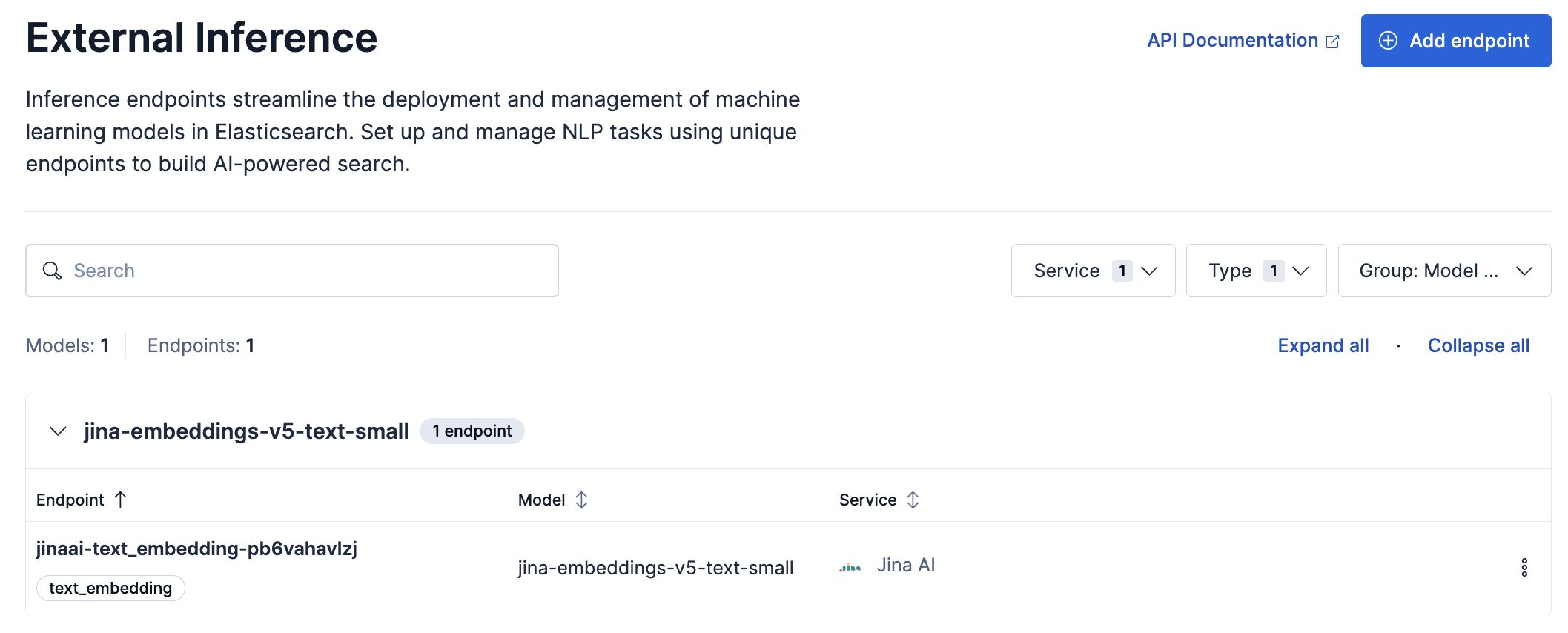
To access External inference, you need the Inference Endpoints: all and Advanced Settings: read Kibana privileges.
Go to the Inference endpoints page by using the navigation menu or the global search field.
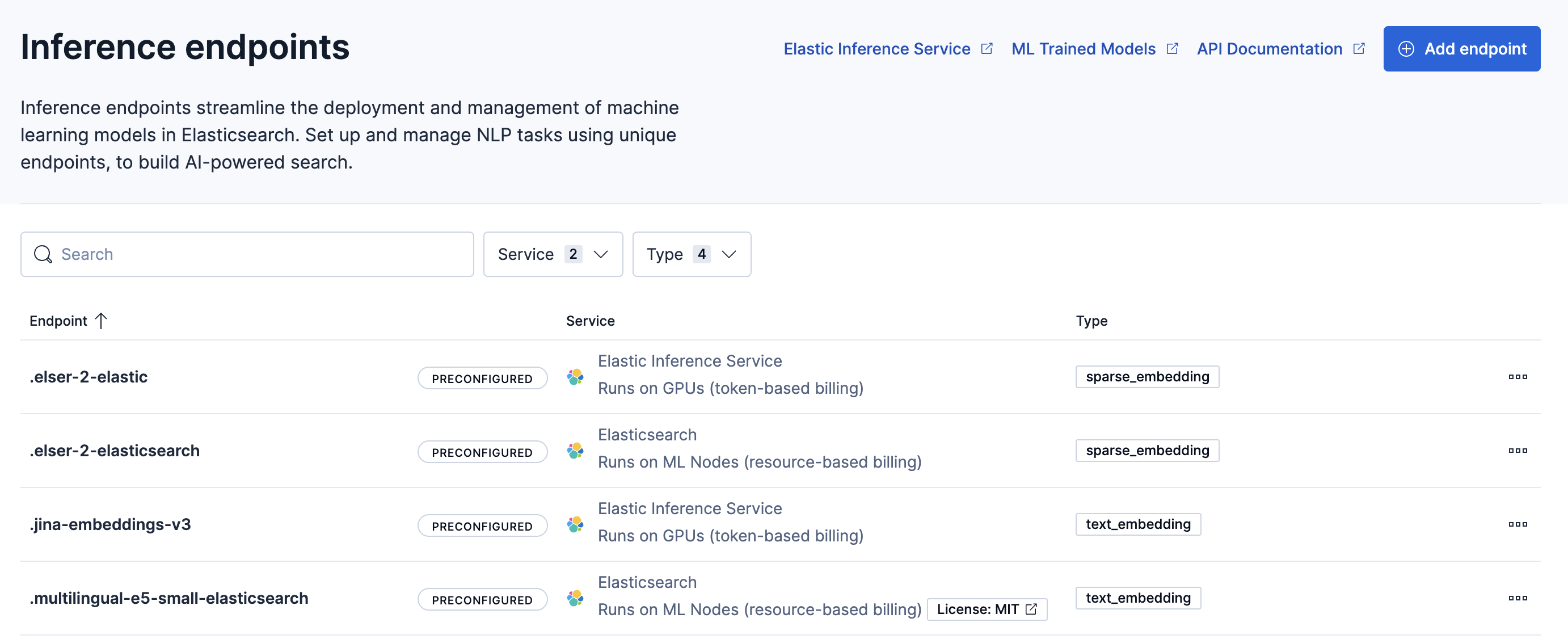
Available actions include:
- Add endpoints
- View endpoint details
- Copy the inference endpoint ID
- Delete endpoints
Alternatively, you can use inference APIs.
Select the Add endpoint button.
Select a service from the drop down menu.
Provide the required configuration details.
For service-specific information, refer to the relevant API documentation. For example, create a JinaAI inference endpoint.
Select Save to create the endpoint.
Elastic Cloud on Kubernetes extends Kubernetes orchestration capabilities to allow you to deploy and manage components of the Elastic Stack. Availability Generally available This functionality is generally available and ready for production usage. This documentation corresponds to the latest patch available for each minor version. If you're not using the latest patch, check the release notes for changes. Elastic Cloud Enterprise is a self-managed orchestration platform for deploying and managing the Elastic Stack at scale. Availability Generally available This functionality is generally available and ready for production usage. This documentation corresponds to the latest patch available for each minor version. If you're not using the latest patch, check the release notes for changes. Self-managed deployments are Elastic Stack deployments managed without the assistance of an orchestrator. Availability Generally available This functionality is generally available and ready for production usage. This documentation corresponds to the latest patch available for each minor version. If you're not using the latest patch, check the release notes for changes. If your model provider uses a TLS certificate signed by a private or internal certificate authority, refer to Trust a private certificate authority for external inference endpoints.