MCP connector and action
Elastic Cloud Serverless projects are autoscaled environments, fully managed by Elastic and available on Elastic Cloud. Availability This functionality is in technical preview and is ready for evaluation. Use with caution in production; it is not recommended for mission-critical workloads. Elastic will work to fix any issues, but features in technical preview are not subject to the support SLA of official GA features. Specific Support terms apply. Serverless interfaces and procedures might differ from classic Elastic Stack deployments. The Elastic Stack includes Elastic's core products such as Elasticsearch, Kibana, Logstash, and Beats. Availability This functionality is in technical preview and is ready for evaluation. Use with caution in production; it is not recommended for mission-critical workloads. Elastic will work to fix any issues, but features in technical preview are not subject to the support SLA of official GA features. Specific Support terms apply. Unless stated otherwise on the page, this functionality is available when your Elastic Stack is deployed on Elastic Cloud Hosted, Elastic Cloud Enterprise, Elastic Cloud on Kubernetes, and self-managed environments. This documentation corresponds to the latest patch available for each minor version. If you're not using the latest patch, check the release notes for changes.
Serverless
Preview
Preview
Stack
Preview
9.3+
Preview since 9.3
The Model Context Protocol (MCP) connector communicates with remote MCP servers to retrieve and call their tools. This connector is required to use external MCP tools in Elastic Agent Builder.
You can create an MCP connector in Stack Management > Connectors. For example:
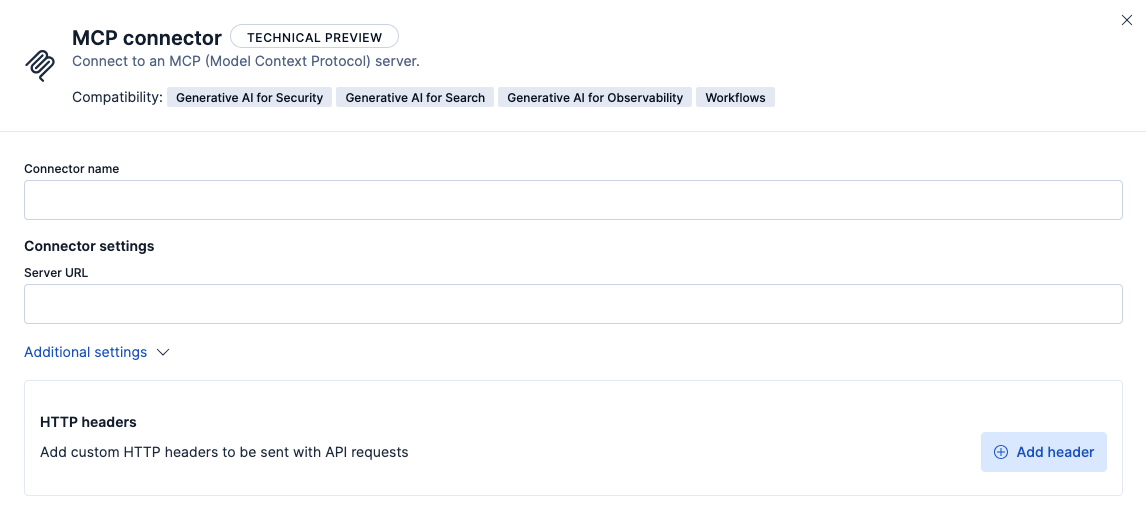
MCP connectors have the following configuration properties:
- Name
- The name of the connector.
- Server URL
- The URL of the MCP server.
- HTTP headers (under Additional settings)
-
A custom set of HTTP headers that you can use to connect to an MCP server.
- Config
- If you choose the config type, values in headers will be sent as plain text in requests.
- Secret
- If you choose the secret type, values in your headers will be encrypted in requests.
You can test connectors as you’re creating or editing the connector in Kibana. For example:
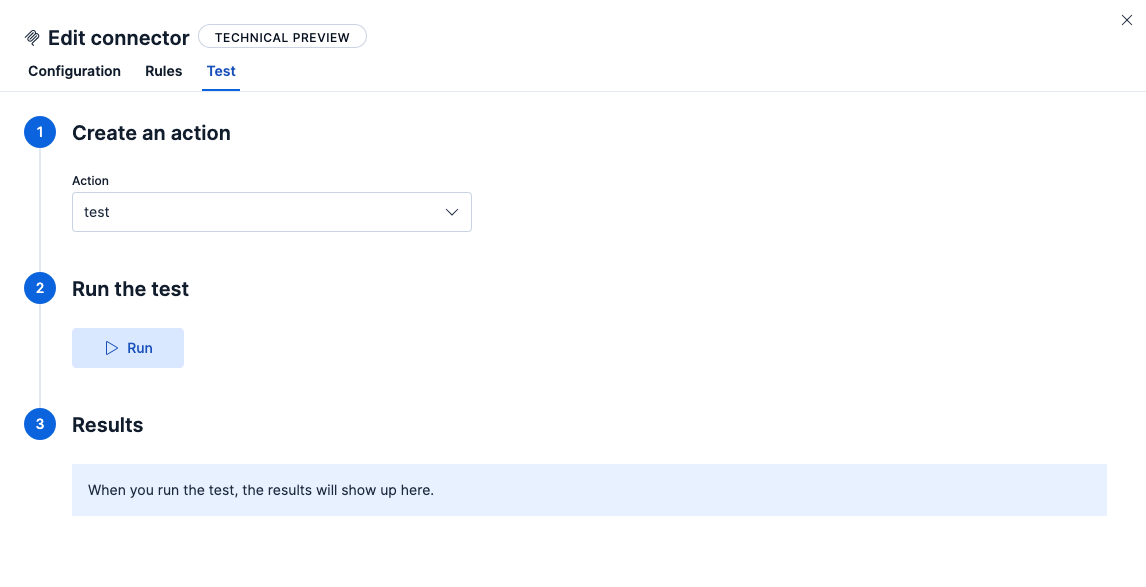
MCP connectors offer three actions:
test- Test the connection to the remote MCP server with any auth that was provided.
listTools- Call the MCP server's
listToolsendpoint. Returns a list of tools and their input and output schemas. callTool- Call a specific MCP server tool.
Call listTools first to understand how to correctly call an MCP server's tools, before using the callTool action.