Microsoft Defender for Endpoint connector and action
Elastic Cloud Serverless projects are autoscaled environments, fully managed by Elastic and available on Elastic Cloud. Availability This functionality is generally available and ready for production usage. Elastic Cloud Serverless projects are autoscaled environments, fully managed by Elastic and available on Elastic Cloud. Availability This functionality is generally available and ready for production usage. The Elastic Stack includes Elastic's core products such as Elasticsearch, Kibana, Logstash, and Beats. Availability This functionality is generally available and ready for production usage. Unless stated otherwise on the page, this functionality is available when your Elastic Stack is deployed on Elastic Cloud Hosted, Elastic Cloud Enterprise, Elastic Cloud on Kubernetes, and self-managed environments. This documentation corresponds to the latest patch available for each minor version. If you're not using the latest patch, check the release notes for changes.
Serverless Observability
Generally available
Serverless Security
Generally available
Stack
Generally available
The Microsoft Defender for Endpoint connector enables you to perform actions on Microsoft Defender-enrolled hosts.
You can create connectors in Stack Management > Connectors or as needed when you're creating a rule. For example:
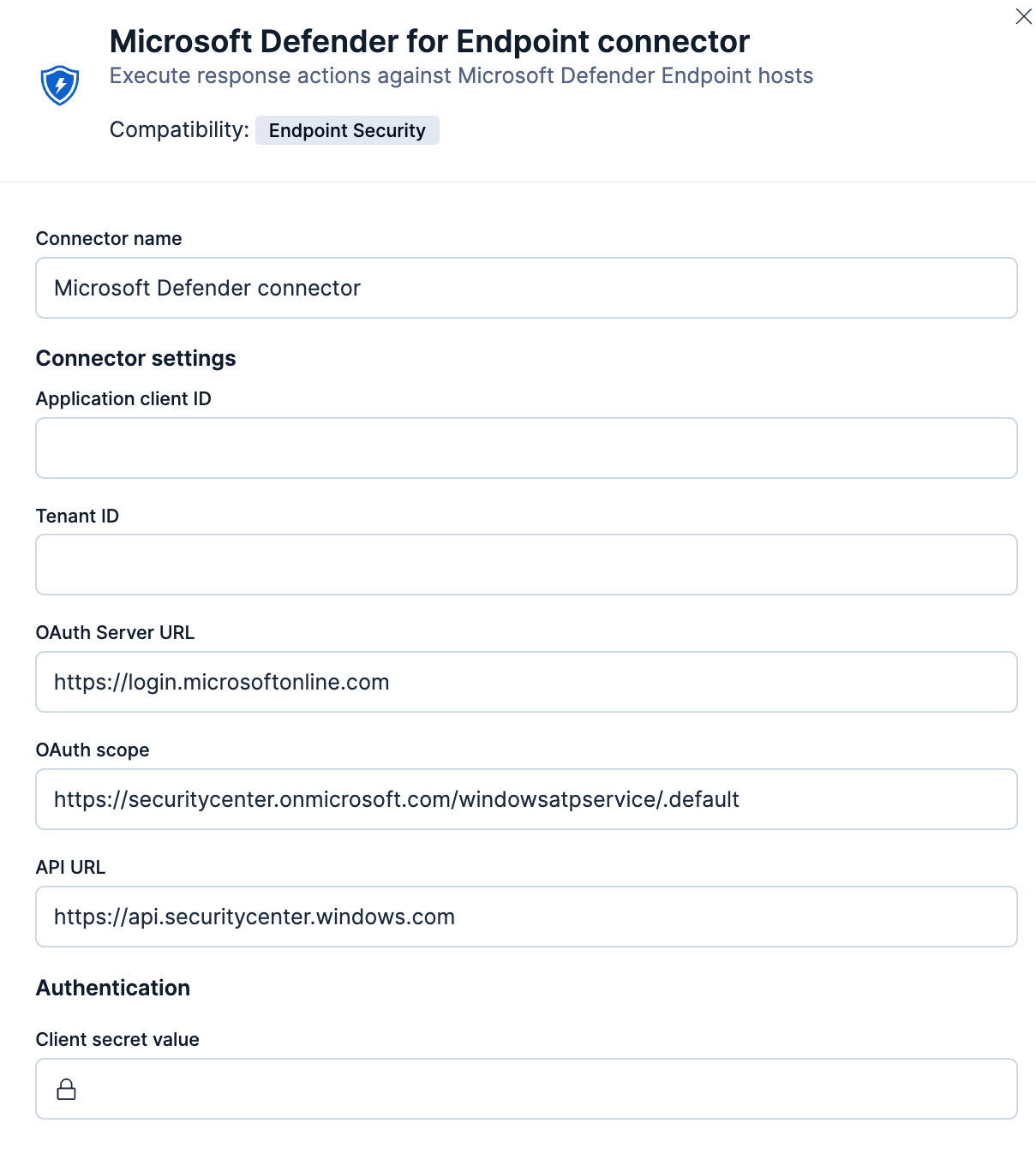
Microsoft Defender for Endpoint connectors have the following configuration properties:
- API URL
- The URL of the Microsoft Defender for Endpoint API. If you are using the
xpack.actions.allowedHostssetting, make sure the hostname is added to the allowed hosts. - Application client ID
- The application (client) identifier for your app in the Azure portal.
- Client secret value
- The client secret for your app in the Azure portal.
- Name
- The name of the connector.
- OAuth Scope
- The OAuth scopes or permission sets for the Microsoft Defender for Endpoint API.
- OAuth Server URL
- The OAuth server URL where authentication is sent and received for the Microsoft Defender for Endpoint API.
- Tenant ID
- The tenant identifier for your app in the Azure portal.
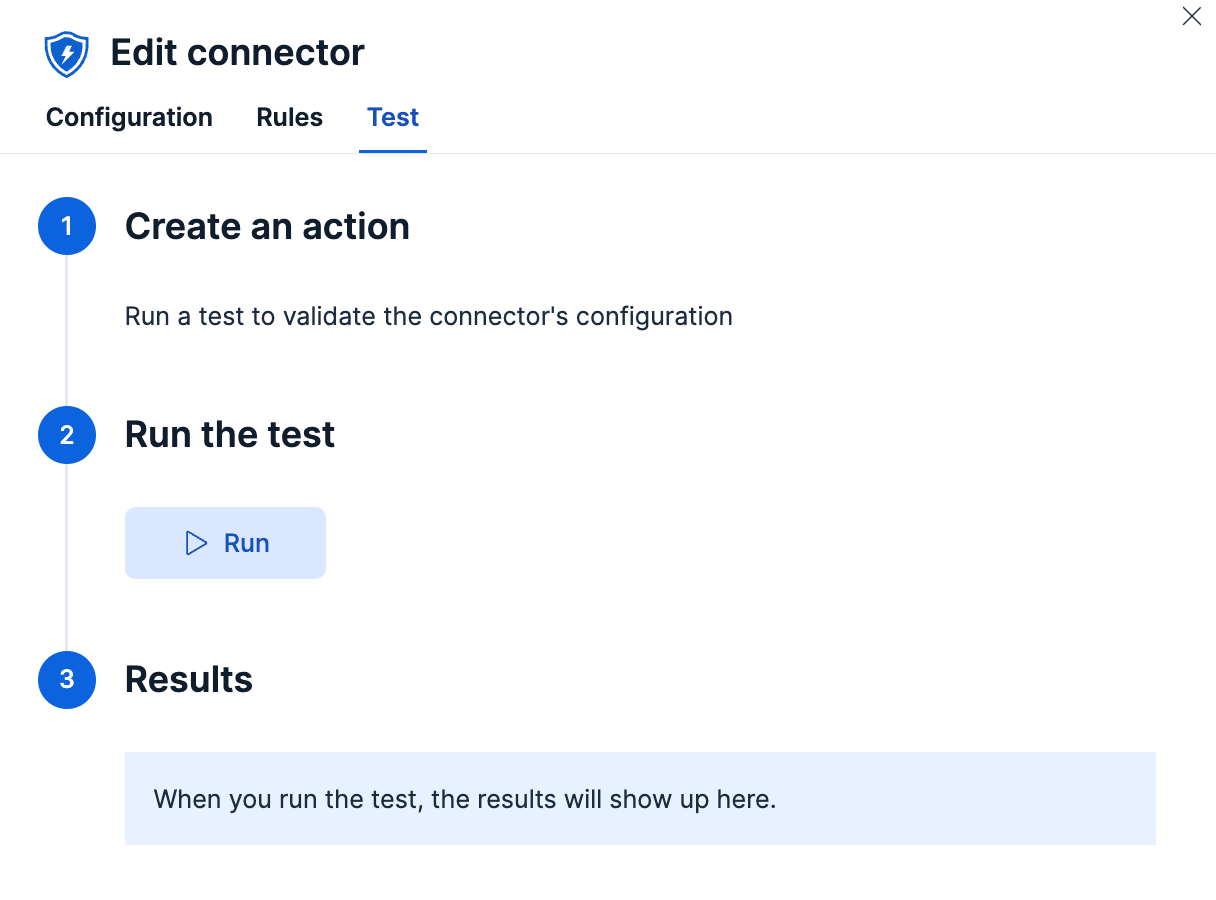
You can test connectors as you're creating or editing the connector in Kibana. For example:
Before you create the connector, you must create a new application on your Azure domain. The procedure to create an application is found in the Microsoft Defender documentation.
Make note of the client ID, client secret, and tenant ID, since you must provide this information when you create your connector.